
FINAL FANTASY III
SQUARE ENIX Co.,Ltd.Role Playing
3.888.00 Reviews
- Version
- 1.2.3
- Installs
- 10.00K
- Age Rating
- Everyone 10+
Screenshots
Our Review of FINAL FANTASY III
 Analysis by Appyee
I like classic role-playing games best when they give me a clear reason to think between battles, and the job system is the part of FINAL FANTASY III that kept me engaged. Rather than asking me to settle on one fixed identity for each hero, it lets me change their jobs and rethink how the group handles a challenge. That flexibility gives this older adventure a distinct rhythm: progress is not just about reaching the next place, but also about deciding who should do what when I get there.
Where the job system earns its place
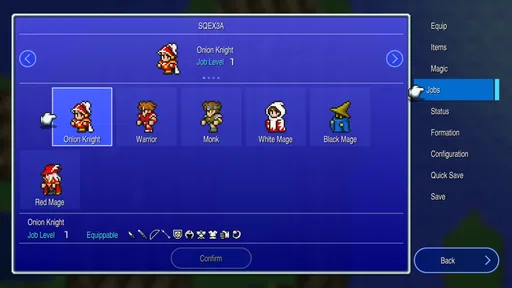
That central idea is still easy to appreciate on a phone. A Warrior can focus on dealing physical damage, while a White Mage gives the party a way to recover; trying different combinations makes the four heroes feel like a team I am actively shaping rather than a lineup I simply watch develop. I found the experimentation more interesting than choosing a single obvious setup and sticking with it. When a fight goes badly, changing the party’s approach feels like a meaningful response, not just a reason to repeat the same encounter.
The system also makes preparation part of the adventure. I can consider what the next stretch may demand and adjust my roles before moving on, instead of treating every battle as an isolated exchange. That is a useful distinction from many mobile RPGs built around brief fights, automatic actions or a steady stream of upgrades. Here, the pleasure is more hands-on: I pay attention to the party and make choices that shape how combat feels. If you enjoy tinkering with a team, that is the game’s strongest reason to give it your time.
Experimenting without turning every fight into homework
I would not approach job changes as a puzzle that has one perfect answer. The fun is in noticing what the party seems to need and trying a different balance. A group built to hit hard may feel exciting when enemies fall quickly, but the option to bring healing into the mix matters when a battle starts to drag. I found that thinking in terms of roles—damage, support and keeping the group standing—was more useful than trying to optimize every decision.
That also gives the game a practical learning curve. Someone new to traditional turn-based RPGs can start with familiar ideas, such as having a dependable attacker and a healer, then explore less obvious combinations as confidence grows. There is room to experiment without needing to understand every possibility before the journey begins. My advice is to make changes when you have a reason, rather than switching jobs constantly just because the option exists; that keeps the system interesting instead of making each decision feel like admin.
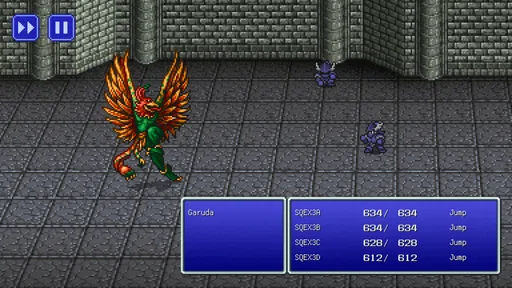
Combat itself stays turn-based and straightforward to read. I choose actions, watch the results and adjust when a boss makes my first plan look shaky. That clarity is a strength, especially on a small screen: I do not need quick reflexes to keep up, and I can take a moment to consider what the party should do. The trade-off is that players who want continuous action or a more modern, cinematic combat style may find the pace deliberate. I enjoyed having time to think, but I would not recommend it as an action game in disguise.
A good fit for small pockets of time—and longer ones
On an ordinary day, I can imagine opening the game while waiting for an appointment, making progress through a stretch of the adventure and putting my phone away when I am called. The autosave makes that sort of interruption less stressful, and it also suits playing at home in short bursts between other tasks. When I have more time, the same game can hold my attention for a longer session because planning the party gives me a reason to keep going beyond a single fight.
That flexibility does not mean every moment feels equally suited to a quick check-in. A story-heavy RPG asks for more attention than a casual game I can play with half my mind elsewhere. I would choose a quiet break rather than a noisy commute if I wanted to follow the adventure and think through a tough encounter. The practical advantage is that I can pause my own session when life intervenes; the limitation is that the game still rewards focus when I am actively playing.
Compared with a typical mobile role-playing game centered on short repeatable battles or automated progression, this feels closer to a traditional console RPG adapted for a handheld screen. That is a real benefit if I want a self-contained journey and tactical choices rather than a routine of checking in for upgrades. It is not automatically better for everyone: players looking for quick rounds with almost no planning may be happier with a lighter mobile game, while people who want a sprawling modern RPG may prefer a newer entry in the genre. This one’s appeal is its old-school structure, not an attempt to imitate every current mobile trend.
Presentation and touch controls
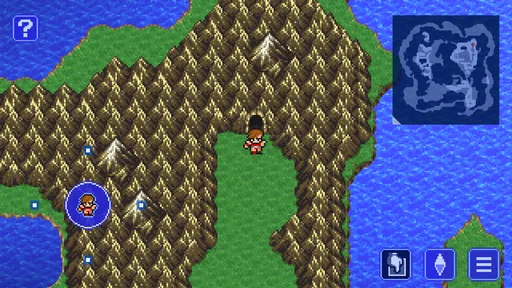
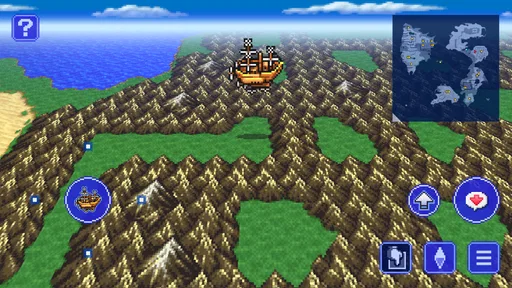
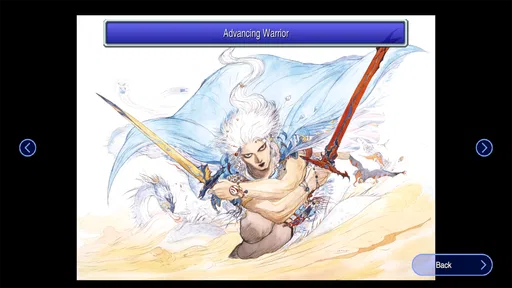
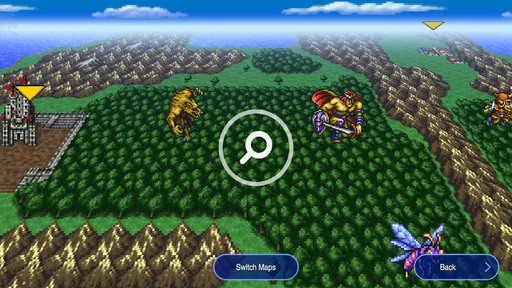
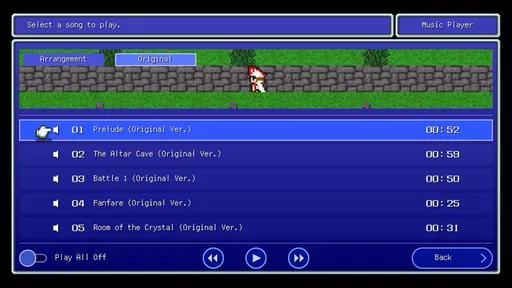
The pixel-art presentation gives the adventure a clear identity, while the remastered visuals look crisp and colorful on a phone. Moving through different environments, from snowy mountains to green forests, helps the journey feel varied without losing its retro character. I liked that the updated look preserves the charm of the original style rather than making the world feel like an unrelated modern game. The music adds to that sense of place: Nobuo Uematsu’s soundtrack supports both the energy of battles and the calmer mood of a village.
Touch controls make navigation approachable, and I found the interface clean enough to use without much friction. Still, there are moments when physical buttons would feel more satisfying, particularly for someone used to playing older RPGs on a dedicated console. That is a matter of preference rather than a deal-breaker, but it is worth considering if you strongly dislike virtual controls. I would try a short session first, paying attention not only to whether movement feels comfortable but also to whether menu navigation suits the way you like to make party decisions.
One useful habit is to treat the autosave as protection against interruptions, not as a substitute for paying attention to the story or your party. I can step away more comfortably, but I still benefit from pausing at a natural moment and checking that I understand what I want to do next. Another is to use changes in difficulty as a prompt to reconsider the team’s jobs rather than simply pushing forward with the same setup. Those two habits make the mobile format feel more convenient without taking away the deliberate planning that defines the game.
What you are paying for, and who should pass
FINAL FANTASY III is a paid role-playing game from SQUARE ENIX Co.,Ltd., priced at $9.99. I think that model suits someone who wants a substantial classic-style adventure without approaching it as a free game built around repeated check-ins. But the upfront cost makes it a less casual choice: if you are unsure whether turn-based combat and retro presentation appeal to you, it is sensible to think about those preferences before buying. The game has a 3.8 average from around 792 ratings, with 88 reviews, and more than 10,000 installs. Those figures offer context, but they do not tell me whether its slower, traditional approach will fit a particular player.
The age rating is Everyone 10+, so it may suit younger players as well as adults who enjoy older RPG conventions. Its current version is 1.2.3, and it runs on operating systems beginning with version 7.0. I would still make sure the device I plan to use meets that requirement before purchasing. More importantly, I would ask whether I want to spend time thinking about party roles and turn-based encounters. If that sounds appealing, the job system gives the journey a strong point of difference; if it sounds like a chore, the game’s polished presentation is unlikely to change your mind.
The strongest audience, in my view, is someone who wants a classic RPG they can play on a phone and enjoys learning a party through experimentation. Long-time fans may appreciate returning to a familiar style, while newcomers can get a clear introduction to a structured, turn-based adventure. I would also recommend it to a player who likes making deliberate decisions but does not need fast action or constant novelty to stay interested. By contrast, I would skip it if I mainly wanted a free-to-start game, a quick arcade session, or a combat system that plays itself while I focus on something else.
Reviving a Classic
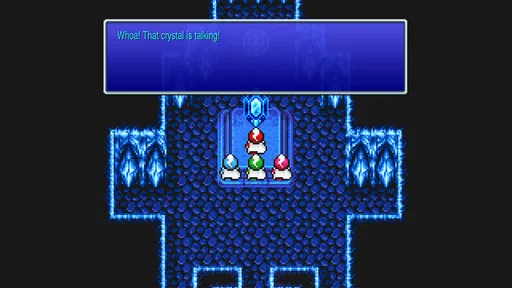
FINAL FANTASY III originally hit the scene in 1990, and while it's been remastered for mobile, it still retains that old-school charm that fans adore. Once I fired it up, the retro graphics mixed with updated visuals immediately caught my eye. It's like meeting an old friend who’s had a fantastic makeover. The game’s story kicks off with four young heroes, the Warriors of Light, who are out to save the world from impending doom. Classic, right?
Gameplay Dynamics
Let’s talk about gameplay. The job system is what truly sets this installment apart. You can switch your characters' classes, and trust me, it’s addictive trying to find the perfect mix. From being a Warrior smashing through enemies to a White Mage healing the team, each job has its perks. I spent hours tinkering with combinations, and it feels like a game within a game.
The turn-based combat is straightforward yet engaging. It's all about strategy, and every decision counts. I particularly enjoyed planning my moves against bosses, which often required a rethink of my strategy. Oh, and did I mention the adorable summons? Calling forth a giant toad to fight on my behalf never gets old.
Visuals and Sound
The graphical overhaul for mobile devices is impressive. While it keeps the pixel art style, everything feels crisp and vibrant. The landscapes are diverse, from snowy mountains to lush forests, and each area has its own vibe. The character sprites are detailed enough to give each one personality, which I found charming.
And let’s not forget the music. Nobuo Uematsu’s soundtrack is like a warm hug from the past, perfectly enhancing the game’s atmosphere. Every track feels carefully crafted to match the mood of the moment, whether it's an epic battle or a quiet village stroll.
User Experience
Playing FINAL FANTASY III on a smartphone is surprisingly smooth. The touch controls are intuitive, and the interface is clean, making navigation a breeze. I did have a moment when I missed the physical buttons of my old game console, but the adaptation here works well enough. Plus, the autosave feature is a lifesaver. No more losing progress because life called me away from my phone.
What I particularly liked was the accessibility. Whether you’re waiting in line or lounging on the couch, it’s easy to pick up and play. The game autosaves frequently, so hopping back in is hassle-free. It's perfect for both short play sessions and those days when you just want to get lost in an epic adventure.
Final Thoughts
In a world where mobile games can often feel disposable, FINAL FANTASY III stands out as a gem. It’s a faithful remaster of a classic RPG that balances nostalgia with modern enhancements. Sure, it’s got some challenges, especially if you’re not used to the older game mechanics, but that’s part of its charm.
If you're a fan of the series or just love a good RPG, give this one a go. It’s more than just a game; it’s an experience. And honestly, who doesn’t want to be a Warrior of Light, even just for a little while?
Verdict
Strengths of FINAL FANTASY III
- Engaging storyline with rich lore.
- Classic turn-based combat system.
- Vibrant, retro-inspired graphics.
- Highly customizable character classes.
- Includes auto-save feature for convenience.
Limitations of FINAL FANTASY III
- Occasional difficulty spikes.
- In-game purchases can be costly.
- Limited tutorials for new players.
- Some controls feel clunky on mobile.
- Battery drain can be significant.
Other Releases by SQUARE ENIX Co.,Ltd.
View All
Manga UP!
Comics4.4

FINAL FANTASY VII EVER CRISIS
Role Playing4.0

FINAL FANTASY III (3D REMAKE)
Role Playing4.2

FINAL FANTASY VII
Role Playing4.0
Similar Picks in This Category
View All
Hair Dye
CrazyLabs LTD4.4

Monster High™ Beauty Salon
CrazyLabs LTD4.5

Bus Simulator - Bus Games 3D
Jima Apps4.4

Flight Pilot: 3D Simulator
Wildlife Studios4.1


Super Stylist Fashion Makeover
CrazyLabs LTD4.4
Frequently Asked Questions
What is the gameplay like in FINAL FANTASY III?
FINAL FANTASY III offers a traditional turn-based RPG experience with a rich storyline and dynamic job system. Players can switch between various jobs, each with unique abilities, allowing for strategic customization of your party. The game features classic exploration, challenging battles, and engaging quests set in a beautifully rendered fantasy world.
Is FINAL FANTASY III suitable for newcomers to the series?
Yes, FINAL FANTASY III is accessible for newcomers while also providing depth for veteran players. Its intuitive controls and tutorials help ease new players into the mechanics, while the strategic depth of the job system and engaging narrative makes it appealing to long-time fans of the series.
How does the job system work in FINAL FANTASY III?
The job system in FINAL FANTASY III allows players to assign specific roles or 'jobs' to their characters, such as Warrior, Wizard, or Thief. Each job comes with unique abilities and stats, offering flexibility in how you approach battles. As you progress, new jobs are unlocked, allowing for deeper customization and strategy.
Are there differences between the mobile version and the original FINAL FANTASY III?
The mobile version of FINAL FANTASY III features updated graphics and a reimagined 3D world, enhancing the original's classic aesthetic. Additionally, it includes touch controls optimized for mobile devices, an auto-battle function, and an optimized save system, making it more accessible for on-the-go gaming.
What are the in-app purchases in FINAL FANTASY III?
FINAL FANTASY III is a premium game, meaning you pay a one-time fee to download it. There are no additional in-app purchases, allowing you to experience the full game without interruptions. This ensures a complete and immersive experience from start to finish, with no hidden costs.
Play our best games!


